GT New Horizons · Steam Age
Railcraft Tank
The Railcraft Tank (RC Tank) is a Steam tier multiblock for storing large amounts of a single fluid. The total fluid capacity of the RC Tank depends on the volume of the structure and the material of the walls. The base must be square and an odd number (3x3, 5x5, 7x7, or 9x9), and the height must be 4-8 blocks tall. Tank gauges and tank valves may replace any wall that is not on the edge of the structure. Valves on the upper layers of the structure function as input hatches and valves on the bottom two layers function as output hatches. However, there is only auto-output on the very bottom layer of the structure and its maximum rate is 20,000 L/s regardless of the material of the walls. The RC Tank is superseded by the YOTTank and TFFT although most players just use AE2 fluid storage cells instead.
Construction
The RC Tank is a variable size structure, but with a few restrictions. The base must be square and an odd number (3x3, 5x5, 7x7, or 9x9), and the height must be between 4-8 blocks tall. The Multiblock Structure Hologram Projector is incompatible with the RC Tank because there is no controller, but it is very easy to build. Simply place the tank walls in a hollow cube of the desired size and it should form automatically. See below for all the valid dimensions of the RC Tank (LxWxH) and the required number of blocks. The tank's data is stored in the bottom center block and breaking it voids the contents inside. Any other block can be broken/replaced without losing anything.
-
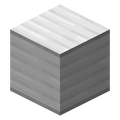 Wall
-
 Gauge
-
 Valve
Gauges and Valves
Tank gauges and tank valves may replace any tank wall that is not on the edge of the structure. Gauges are windows for seeing the current fill level from the outside and valves are for fluid I/O. More specifically, valves on the upper layers of the structure function as input hatches and valves on the bottom two layers function as output hatches. Auto-output only works for valves on the very bottom layer of the structure, otherwise a seared faucet or pump is required to pull the fluid out.
Volume
The total fluid capacity of the RC Tank scales with the volume of the tank, NOT the number of tank walls. The two generally increase together, but there are a few cases where it makes a small difference. For example, 5x5x8 and 7x7x4 both have the same number of tank walls but the former can hold more fluid because it has a slightly higher volume. The following table lists the volume and required number of blocks for each size.
|
| ||||||||||||||||||||||||||||||||||||||||||||||||||||||||||||||||||||||||||||||||||||||||||||||||||||||||||||||||||||
Material
The tank walls, gauges, and valves all come in a variety of materials to further increase the fluid capacity of the RC Tank. The available materials and their individual capacities are listed in the following table. Every part of the RC Tank must be the same material in order for the structure to form--there is no mixing. To calculate the total fluid capacity of a tank, multiply one of the capacities below by one of the volumes above. A few examples are provided for reference.
| Material | Capacity per Block | 3x3x4 | 5x5x5 | 7x7x7 | 9x9x8 |
| Iron | 16,000 L | 576k L | 2.00M L | 5.49M L | 10.4M L |
| Steel | 32,000 L | 1.15M L | 4.00M L | 11.0M L | 20.7M L |
| Aluminum | 64,000 L | 2.30M L | 8.00M L | 22.0M L | 41.5M L |
| Stainless Steel | 128,000 L | 4.61M L | 16.0M L | 43.9M L | 82.9M L |
| Titanium | 256,000 L | 9.22M L | 32.0M L | 87.8M L | 166M L |
| Tungstensteel | 512,000 L | 18.4M L | 64.0M L | 176M L | 332M L |
| Palladium | 1,024,000 L | 36.9M L | 128M L | 351M L | 664M L |
| Iridium | 1,536,000 L | 55.3M L | 192M L | 527M L | 995M L |
| Osmium | 2,048,000 L | 73.7M L | 256M L | 702M L | 1.33G L |
| Neutronium | 3,072,000 L | 111M L | 384M L | 1.05G L | 1.99G L |
Wallsharing
As a Railcraft multiblock, the RC Tank cannot wallshare any part of its structure and must be at least one block apart from other RC Tanks to form.
Usage
The RC Tank automatically pushes fluids from tank valves on the bottom layer of the structure to any adjacent inventories or fluid pipes. The maximum output rate is 20,000 L/s regardless of the material of the walls. If that is not enough throughput then use a pump, fluid regulator, or steam regulator to manually pull the fluid out. However, that does not stack with the built-in 20,000 L/s so it might be better to just use multiple valves instead.