GT New Horizons · Steam Age
Railcraft Boiler
The Railcraft Boiler (RC Boiler) is a Steam tier multiblock for boiling water into steam with combustible fuels. The size of the structure is highly flexible and determines the overall throughput of the machine; more fireboxes/tanks means higher fuel consumption AND steam production. Similarly, high pressure tanks have more than twice the throughput of low pressure tanks. The fuel can be either solid or liquid depending on the type of firebox used, but there must always be water available to produce any steam. The heat of the RC Boiler increases during activity and decreases while idle. The heat is directly proportional to the amount of steam produced so keep the RC Boiler as hot as possible for as long as possible to maximize output and efficiency. Do not add water to a dry RC Boiler that is greater than 300°C or else it will explode.
The RC Boiler pairs very well with the Coke Oven in the early game because both charcoal and creosote oil can be used as fuel. They can even be in the same SOLID-FUELED fireboxes if the creosote oil is bucketed in a fluid tank beforehand. The RC Boiler is superseded by the Large Boiler, but not until the steel version because the bronze version has less efficiency and lower throughput.
Construction
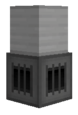
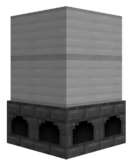
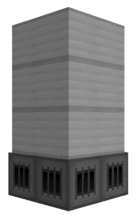
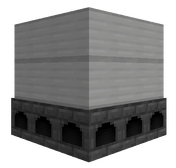
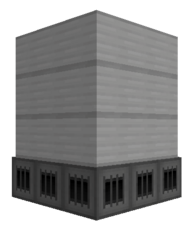
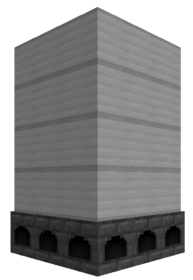
The RC Boiler consists of fireboxes on the bottom layer and boiler tanks on the layer(s) above that. The fireboxes can only be 1x1, 2x2, or 3x3 in size and determine the type of fuel that can be used--solid OR liquid. The tanks must have the same horizontal dimensions as the fireboxes, but the height can vary a little bit. See below for all the valid dimensions of the RC Boiler (LxWxH). Anything not listed will not form. The tanks can either be low pressure (LP) or high pressure (HP). The difference is that LP tanks have a maximum heat capacity of 500°C and HP tanks have a maximum heat capacity of 1000°C. The latter takes much longer to reach, but has higher efficiency and produces significantly more steam. See below for more details. As a Railcraft multiblock, the Multiblock Structure Hologram Projector is incompatible with the RC Boiler.
|
|
|
|
|
|
| 1x1x2 | 2x2x3 | 2x2x4 | 3x3x3 | 3x3x4 | 3x3x5 |
| 1 Firebox | 4 Fireboxes | 4 Fireboxes | 9 Fireboxes | 9 Fireboxes | 9 Fireboxes |
| 1 Tank | 8 Tanks | 12 Tanks | 18 Tanks | 27 Tanks | 36 Tanks |
Wallsharing
As a Railcraft multiblock, the RC Boiler cannot wallshare any part of its structure and must be at least one block apart from other RC Boilers to form.
Usage
Right-click anywhere on the structure to open the RC Boiler's internal inventory. Solid-fueled fireboxes have four item slots and liquid-fueled fireboxes have a 16,000L fuel tank, regardless of the size of the structure. Both also have an internal water and steam tank whose size scales with the total number of boiler tanks; every LP tank increases the water capacity by 4,000L and the steam capacity by 16,000L; every HP tank increases the water capacity by 4,000L and the steam capacity by 32,000L.
Insert fuel and water through the fireboxes on the bottom layer of the structure. Solid-fueled fireboxes can auto-input or pull items from adjacent inventories, but only if they have 27 or more item slots (e.g. vanilla chests and barrels). Other types of storage such as drawers, JABBA barrels, and super chests require an external force such as a hopper or conveyor module cover to pull the items out of them. Empty buckets may be extracted from the fireboxes manually or with a hopper directly underneath.
Extract steam from the boiler tanks on the upper layer(s) of the structure. Boiler tanks can auto-output or push steam to adjacent fluid pipes at a maximum rate of 20,000 L/s per connection, but only if their heat capacity is greater than 420K--the temperature of steam. Otherwise, the pipe burns up and voids. The best options for materials early-on are bronze, potin, and dark steel.
 Caution: | The RC Boiler does not explode if exposed to rain, unlike GregTech machines, but it can explode if water is added to a dry RC Boiler that is greater than 300°C. Wait until the machine cools down before adding more. |
Heat
The heat (°C) of the RC Boiler increases while active and decreases while idle, as seen in the following equations where is the total number of boiler tanks. Notice that the heat changes relatively slowly, especially at higher heat and for larger structures with more boiler tanks.
Fuel
Solid-fueled fireboxes accept nearly any fuel with a burn time, including diamonds and creosote BUCKETS. Search "burn time" in NEI to see all the available options. The only exceptions are scaffolding and scrap which are both incompatible with the RC Boiler, and blaze rods and lava buckets are both nerfed down to  1,000. Liquid-fueled fireboxes are much more restrictive. The only available options for liquid fuel are listed in the following table, along with some of the most popular solid fuel options. Those highlighted blue are the outputs from the Coke Oven.
| Solid Fuel | Burn Time | Liquid Fuel | Burn Time per 1,000L | |
| Planks/Logs | 300
|
Creosote Oil | 6,400
| |
| Coal/Charcoal | 1,600
|
Ethanol / Bio Diesel | 16,000
| |
| Sulfur Dust | 1,600
|
Hootch | 36,000
| |
| Coal Coke | 3,200
|
Diesel | 48,000
| |
| Creosote Bucket | 6,400
|
Blazing Pyrotheum | 64,000
| |
| Diamond | 102,400
|
Fire Water | 120,000
|
The max amount of fuel (burn time) consumed per cycle depends on the total number of boiler tanks () and their maximum heat, as seen in the following equation. One cycle is 16 ticks for LP tanks and 8 ticks for HP tanks. Notice that additional tanks slightly increase the efficiency of the fuel.
Water & Steam
The amount of water (L) consumed and steam (L) produced per cycle depends on the total number of boiler tanks () and the current heat (°C), as seen in the following equations. The only difference between them is the constant at the end which establishes the standard 1:160 water to steam ratio that every boiler and turbine in GTNH follows. At maximum heat, each LP tank produces 10L of steam per tick and each HP tank produces 40L of steam per tick. HP tanks have 4x the throughput of LP tanks because they can reach 1,000°C instead of 500°C and they cycle twice as fast. Steam is only outputted above 50% capacity.
Static Heat
Providing less than the maximum fuel per cycle does not necessarily mean that the heat is guaranteed to fall to 0°C. The more likely scenario is that the heat converges at some intermediate level between 0°C and maximum heat. To determine where exactly that is, first find the percent uptime from the current amount of fuel available or the current number of Coke Ovens.
| Multiplying the uptime and its complement with the active and idle heat equations from earlier then results in a simple equation for determining the static heat level or equilibrium point of the machine. In other words, the following is where the heat of the RC Boiler converges based on its uptime.
Anything less than 20% uptime stays at 0°C and anything greater than 80% uptime eventually reaches the maximum heat of the RC Boiler, whether that is 500°C or 1,000°C. The only caveat is that anything less than 100% uptime takes significantly longer to warm-up. |
| ||||||||||||||||||
Summary
The following tables summarize the above equations for one RC Boiler. The sizes are all LxWxH and include the fireboxes, as shown earlier. The amount of water consumed and steam produced are both at maximum heat. The number of Coke Ovens depends on whether both fuels (charcoal and creosote oil) are used in the same SOLID-FUELED firebox or not. If they are, the creosote oil must be bucketed in a fluid tank beforehand--see the automation section below for details. The number of Water Tanks assume that they are all in a biome with 100% humidity and have sky access.
Only 80% of the fuel or Coke Ovens are actually required to reach and maintain maximum heat, but having that few would extend the initial warm-up period significantly. It is therefore recommended to at least start with the maximum fuel consumption rates listed below, and then afterwards use the extra 20% of fuel for something else. This can be done by building additional Coke Ovens and repurposing them later, or by stockpiling fuel in advance.
| Size (LP) | Tanks | Time to 500°C | Fuel (Burn time) | Water | Steam | Coke Ovens | Water Tanks | ||
| One Fuel | Both Fuels | ||||||||
| 1x1x2 | 1 | 3m 46s | 13.4/s
|
1.25 L/s | 200 L/s | 0.75 | 0.38 | 0.05 | |
| 2x2x3 | 8 | 30m 8s | 100/s
|
10.0 L/s | 1,600 L/s | 5.62 | 2.81 | 0.40 | |
| 2x2x4 | 12 | 45m 12s | 144/s
|
15.0 L/s | 2,400 L/s | 8.10 | 4.05 | 0.60 | |
| 3x3x3 | 18 | 67m 48s | 203/s
|
22.5 L/s | 3,600 L/s | 11.4 | 5.71 | 0.90 | |
| 3x3x4 | 27 | 101m 42s | 273/s
|
33.8 L/s | 5,400 L/s | 15.4 | 7.68 | 1.35 | |
| 3x3x5 | 36 | 135m 35s | 324/s
|
45.0 L/s | 7,200 L/s | 18.2 | 9.11 | 1.80 | |
| Size (HP) | Tanks | Time to 1,000°C | Fuel (Burn Time) | Water | Steam | Coke Ovens | Water Tanks | ||
| One Fuel | Both Fuels | ||||||||
| 1x1x2 | 1 | 7m 37s | 31.8/s
|
5.00 L/s | 800 L/s | 1.79 | 0.89 | 0.20 | |
| 2x2x3 | 8 | 60m 57s | 240/s
|
40.0 L/s | 6,400 L/s | 13.5 | 6.75 | 1.60 | |
| 2x2x4 | 12 | 91m 25s | 348/s
|
60.0 L/s | 9,600 L/s | 19.6 | 9.79 | 2.40 | |
| 3x3x3 | 18 | 137m 7s | 495/s
|
90.0 L/s | 14,400 L/s | 27.8 | 13.9 | 3.60 | |
| 3x3x4 | 27 | 205m 41s | 682/s
|
135 L/s | 21,600 L/s | 38.4 | 19.2 | 5.40 | |
| 3x3x5 | 36 | 274m 14s | 828/s
|
180 L/s | 28,800 L/s | 46.6 | 23.3 | 7.20 | |
For Reference:
- 1 Coke Oven produces 1 charcoal and 250L of creosote oil every 90 seconds for a combined average output of 35.55/s.
- 1 Advanced Coke Oven produces 15 charcoal every 16 seconds for an average output of 1,500/s.
- 1 Water Tank with 100% humidity and sky access produces 25 L/s of water.
- 1 Water Pump T1 with 100% humidity produces 1,500 L/s of water at the cost of 1,500 L/s of steam.
- 1 Thirsty Tank produces 1,000L of water every 1.5 seconds for an average rate of 667 L/s. Place on top of a block of water.
Automation
The challenge in using the RC Boiler effectively is using the few tools available in the early game to automatically input charcoal, creosote oil, and water while also automatically outputting steam. The two predominant strategies for automating the RC Boiler are listed below.
- Separate - One solid-fueled RC Boiler for charcoal and one liquid-fueled RC Boiler for creosote oil. They should be the same size and use the same type of boiler tanks because one charcoal has the exact same burn time as 250L of creosote oil (1,600).
- Combined - One solid-fueled RC Boiler for both charcoal and creosote BUCKETS. A single RC Boiler is much more efficient than two smaller ones, and it reduces the required number of Coke Ovens.
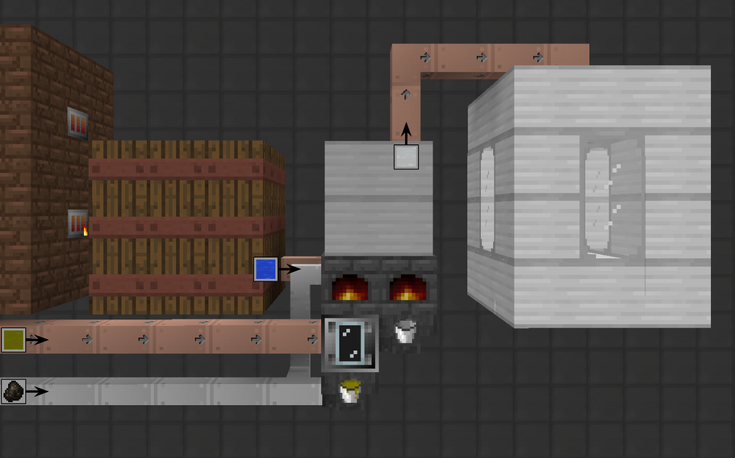
The following is an example for automating the RC Boiler with the combined strategy, although the separate strategy is very similar. Water is pulled from a nearby Water Tank and passed to the fireboxes with a fluid pipe. Charcoal is pulled from nearby Coke Ovens and passed to the fireboxes with an item pipe. Creosote oil is stored in an ultra low voltage (ULV) fluid tank underneath the RC Boiler. Place two hoppers as shown to automatically collect the empty buckets from the RC Boiler and pass full creosote buckets to the same item pipe as the charcoal. The buckets are NOT consumed in the process. Steam is automatically pushed to the connected fluid pipe above the RC Boiler and passed to a Railcraft Tank for storage.
Exceeding the minimum number of dedicated Coke Ovens slowly creates a surplus of charcoal and/or creosote oil over time. That can eventually cause the Coke Oven(s) to stop processing which is problematic if they are used for other things, such as fuel for the Bricked Blast Furnace. The solution is to create a buffer with a way to void any excess materials. Try using the void upgrade for drawers/barrels, and the void excess option for super tanks.
Trivia
- The item with the longest burn time in GTNH is the block of quintuple compressed coal coke (1,889,568,000).