The Large Chemical Reactor (LCR) is an HV tier multiblock for performing larger and more advanced chemical reactions. The LCR is a direct upgrade from the singleblock chemical reactor because it runs perfect overclocks and offers several all-in-one recipes. Sulfuric acid, for example, can be made directly from sulfur, water, and oxygen. The LCR also does not use fluid cells in any of its recipes which makes it significantly easier to use and scales much better. The LCR is superseded by the Mega Chemical Reactor in LuV.
Construction
The LCR consists of a single type of casing, aside from the PTFE pipe casing at the center of the structure and a heating coil directly adjacent. The heating coil can occupy the center casing on any side and is not limited to the back of the machine. The heating coil can also be any tier and has no effect on the operation of the machine. Buses/hatches may replace any casing anywhere on the structure. Multi-amp and laser energy hatches are not supported, but there can be multiple regular energy hatches for overclocking. Use the Multiblock Structure Hologram Projector to visualize/build the structure.
Structure
Controller: Front center, 2nd layer
8-22 Chemically Inert Machine Casing
1 PTFE Pipe Casing
1 Heating Coil: Any center side casing
1+ Energy Hatch: Any casing
1 Maintenance Hatch: Any casing
1+ Input Bus/Hatch: Any casing
1+ Output Bus/Hatch: Any casing
Wallsharing
LCRs may wallshare each of their sides to save on casings and buses/hatches. That includes the heating coil and maintenance hatch. A common practice for chemical processing lines is to place and filter output buses/hatches on any shared casings and point them directly into input buses/hatches on an adjacent LCR. That helps reduce the amount of pipes surrounding these machines and bypasses fluid pipe transfer limits.
Usage
The LCR is a direct upgrade from the singleblock chemical reactor because it runs perfect overclocks and offers several all-in-one recipes. The LCR is the first multiblock that the player encounters in GTNH with unlimited perfect overclocks and it is important to understand how powerful they are. Perfect overclocks not only have twice the speed bonus as imperfect overclocks, but they are also perfectly energy efficient; perfect overclocks do not increase the total EU of recipes so there is no downside to increasing the voltage of the machine.
Imperfect Overclock - 2x speed for 4x power (2/4).
Perfect Overclock - 4x speed for 4x power (4/4).
The LCR only works with pure liquid inputs and outputs so there are never any fluid cells in any recipe. As with all multiblocks, filter the output buses/hatches to specific items/fluids for absolute control on where they leave the machine.
All-In-One Recipes
The following table lists most of the LCR's all-in-one recipes by their programmed circuit value, inputs, and outputs. All-in-one recipes are unique because they are not possible in the singleblock chemical reactor and skip steps to produce advanced compounds directly. For example, sulfuric acid no longer requires sulfur dioxide or sulfur trioxide and instead can be made directly from sulfur dust.
Inputs
Outputs
Oxygen
(3,000 L)
Water
(1,000 L)
Sulfur
(1 Dust)
Sulfuric Acid
(1,000 L)
Oxygen
(27,000 L)
Water
(9,000 L)
Sulfur
(9 Dust)
Sulfuric Acid
(9,000 L)
Oxygen
(4,000 L)
Hydrogen
(3,000 L)
Nitrogen
(1,000 L)
Nitric Acid
(1,000 L)
Oxygen
(2,000 L)
Hydrogen
(4,000 L)
Carbon
(2 Dust)
Acetic Acid
(1,000 L)
Oxygen
(2,500 L)
Water
(1,500 L)
Phosphorous
(1 Dust)
Phosphoric Acid
(1,000 L)
Chlorine
(12,000 L)
Hydrofluoric Acid
(4,000 L)
Methane
(2,000 L)
Tetrafluoroethylene
(1,000 L)
Hydrochloric Acid
(12,000 L)
Chlorine
(2,000 L)
Water
(1,000 L)
Propene
(1,000 L)
Mercury
(100 L)
Sodium Hydroxide
(3 Dust)
Epichlorohydrin
(1,000 L)
Salt Water
(1,000 L)
Hydrogen
(2,000 L)
Chlorine
(2,000 L)
Hypochlorous Acid
(1,000 L)
Propene
(1,000 L)
Sodium Hydroxide
(3 Dust)
Epichlorohydrin
(1,000 L)
Salt Water
(1,000 L)
Hydrochloric Acid
(1,000 L)
Chlorine
(4,000 L)
Water
(1,000 L)
Propene
(1,000 L)
Sodium Hydroxide
(3 Dust)
Epichlorohydrin
(1,000 L)
Salt Water
(1,000 L)
Hydrochloric Acid
(2,000 L)
Epichlorohydrin
(2,000 L)
Hydrochloric Acid
(1,000 L)
Acetone
(1,000 L)
Phenol
(2,000 L)
Sodium Hydroxide
(6 Dust)
Epoxid
(1,000 L)
Salt Water
(2,000 L)
Colored Hatches
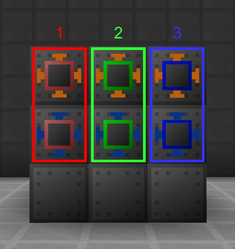
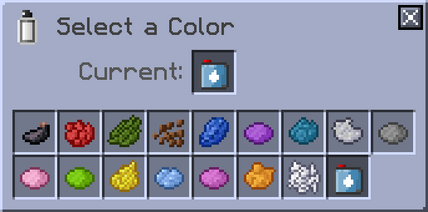
Input separation is permanently disabled on the LCR which means all buses/hatches may see each other's contents, including any programmed circuits and non-consumables. That does not affect machines dedicated to one specific recipe, but it is extremely problematic when trying to run different recipes in the same machine. The solution is coloring buses/hatches with a spray can to designate exactly which ones can see each other's contents.
Buses/hatches that are the same color are effectively their own exclusive channel and can work together to craft recipes. Buses/hatches that are different colors are logically separated and never see each other's contents, just like with normal input separation rules but this time for both items and fluids. Uncolored buses/hatches are a wildcard because their contents are visible to all colors simultaneously.
Three sets of colored buses/hatches.
Color priority ranges from black (highest) down to white (lowest).
Colored buses/hatches also override the default priority system for choosing which recipe to process next. More specifically, they always follow the order in the image above. Black has the highest priority and white has the lowest which means if there were inputs in both, then the LCR would always choose the former over the latter regardless of what is currently running. Uncolored buses/hatches are again a wildcard because they do not have a priority value. If the LCR had to choose between a colored and uncolored bus/hatch then it would base it off another factor rather than color.
Unique Applications
One LCR for Diesel
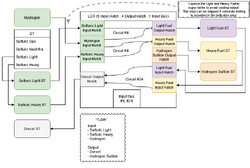
Diesel from one LCR
Although diesel requires a few steps to make, it is possible to make everything in a single LCR. It is wasteful to have an entire LCR just for the desulfurization process because it mostly sits idle even with multiple Distillation Towers running continuously. See the flow diagram for information on setting this up.
Two LCRs for the Platline
The platinum processing line has many different steps and intermediate products. It is extremely common to use dedicated machines for everything. However, it is possible to use only two LCRs for the entire platline which saves a lot of space and resources. Furthermore, less machines means less energy hatches when upgrading. See the discord thread for information on setting this up.


 is permanently disabled on the LCR which means all buses/hatches may see each other's contents, including any programmed circuits and non-consumables. That does not affect machines dedicated to one specific recipe, but it is extremely problematic when trying to run different recipes in the same machine. The solution is coloring buses/hatches with a spray can to designate exactly which ones can see each other's contents.